Friday, February 18, 2022


Wednesday, December 16, 2020
The Forgotten Lair

With tired and cataract-foggy eyes
He stood gazing at
The lush green glade
and the arboreal stead.
It's wooden fence with a rickety gate.
Sunlight and moonbeam could easily filter
through the gaps in the wooden rafters
of the old hay-stacked barn.
He lumbered on the dusty trail
Moving towards the farm-
To its familiar sight and sound.
Grazing cows, clucking hens
And lilting tune of a bird song.
Sighing in vain he remorsefully touched
His weather-worn face with his work-worn hands.
He tried recalling his childhood memories
of life and land he had forsaken
to pursue his cherished dreams;
that he as a young lad had dreamt.
Caught in rat race he had denied his origin;
To which he now returned all spent,
To life, he had ignored,
To his the lair he had forgotten...
Sunday, July 12, 2020
CAUSE & EFFECT - II

We constantly react to or respond to internal and/or external stimuli. Our reaction or response depends on our knowledge, experience, habits, beliefs and, faith that often often define our perceptual bias and prejudice. This often prevents us to seeing straight without any contextual reference to the object of cause and let our perceptual bias react spontaneously to the stimulus, the cause, instead of pragmatically comprehending the cause and responding to it. This becomes the main cause of the stress and strain we experience in our life.
We tend to give in to perceptual illusion than the pragmatic truth. This indicates our lack of true sense of worth and makes us set unrealistic expectations from ourselves. We then lay undue focus on achieving our objective without compassionately and ethically considering its consequences that can be negative both on the long as well as the short run.
When we are aware of our abilities and challenges then we are able to develop our grit, self worth, courage, focus, self-empathy, selfless love, respect to diligently fulfill our expectations. With true self-perception we invariably develop the strength to ethically focus on our achieving our objective, rather than pay attention to "People's perception of us and invariably allow them to control our life with the tagline "What Will People Say?" "Will We be Socially Rejected or Ostrasized?"

Whenever we fail in achieving our set objectives, for example, not qualifying in an exam or test, or our business proposal or job application gets rejected. We do not take kindly to ourselves and accuse ourselves of our failure. Likewise, when we are unable to overcome people's prejudiced and biased reaction to our pragmatic effort, we are overcome with grief preventing us from seeing straight and assessing the cause of rejection/failure. This becomes our blind spot that prevents us from identifying and analysing the cause. Often we ignore the fact such setbacks and failures are a blessing in disguise. We need to approach them with compassion and fortitude to understand it and use it as a stepping stone to overcome the challenges.
Richa didn't qualify the interview and she was offensive to the interviewer's remark. "Sorry, Richa, we cannot select you for the job. You are too closed and not open to learning, teamwork and innovation." She meekly thanked him and hurried out of the room trying to hide her tears. This was the umpteenth time she had not cleared a job interview. She was heartbroken and her self-worth had hit the nadir. From then on, whenever she used to read a job posting she used to tell to herself "I am not fit for the job!" The rejection letters often used to have a trailing advertisement of some institute offering professional skill development programme that would help in having a successful career! Such promotional messages would sadden her, making her believe she lacked the talent to gain employment. She did not have the financial means to enroll for any formal up-skilling course. She started feeling worthless until her sister saw her crying and asked her the reason for her feeling sad. After attentively listening to Richa her sister spoke to her, "Why do you ignore all that you have achieved in your life? When you aware of your knowledge, experience and skills, then why are you applying for every available job? You can informally hone your skills and practice them too. You can apply for jobs that are apt for you and even try out for different avenues like your own small business or such enterprise. Always believe in yourself and remember, sky is the limit. Look up, remain positive and you will be able to find your way out of the woods."

No one can hurt you unless you allow them to. This holds good regarding our thoughts. We have different thoughts passing through our mind. Our mind is like a highway with numerous thoughts traversing it. How we manage in regulating the thoughts is how mindful we are of them.
Meditation is a way to take control of our mind and check the thoughts that worry us, make us anxious and stressful. Meditation empowers us with the ability to live in the moment mindfully aware of our environment within us and that surrounding us.
When we focus on what ever we are doing, such as writing, listening to music, artwork or computing, our focus and mindful involvement in our activity helps us ward off oppressively disturbing and distressing thoughts that can become the cause of worry, anxiety and negative emotions that invariably affect our mental as well as physical health and well-being.

When a child is born, he cries out expressing his awareness of being in a new world away from the sanctuary of his mother's womb. The child is born with few hard wired traits like being an altruist, rationality, love, compassion and child's innocence, until his experiences of living in the world and his perceptions gradually change with what he learns from his parents and people he develop a sense of belonging to. These inputs develop his perception into habits, belief and faith. With life's formal and informal learning and experience, the child, who is an adult now, can change his perceptions, beliefs, and habits, but, as a hallmark of his maturity and wisdom. he has to pass the litmus test is in maintaining his inherent traits of compassion, love, altruism, ability to reason and, innocence, without giving in to any bias, prejudice and blind faith.

We often tell each other to be positive in difficult times. In fact, we find it difficult to remain positive while experiencing perceptual slander, bias and prejudice of the people in the form of idiosyncrasies. This often bogs us down. We try to offset it with a rationale we consider to be positive. This causes undue stress and forces us to prove ourselves while trying to retain our self worth. "In fact, We Have Nothing To Prove When We Are Aware of Our Self-Worth." We can overcome such stress and setbacks with self-belief, self-confidence and a self-worth. The resultant dignity is our ability to see through the illusory vision of external bias and prejudice. We invariably develop the ability to be humble, and courageous enough to compassionately perceive the negative experience such a negative and biased behaviour of the people. The hurt in them that exhibits their low self-worth as pride and arrogance. We should have the ability to discern a cry of anguish from a cry of arrogance.
Maturity is nothing but our ability to be true to ourselves while being aware of our strengths and weakness. Humility to accept our weakness without hiding it behind a false facade. Our resilience, dignity and self worth helps us to overcome our weakness without using any unfair means in doing so. This understanding helps us to observe opportunity in every failure and impending learning in our success and achievement. We eventually consider them to be our steps towards our evolution and wisdom.

Diversity is a universal truth. We meet different kinds of people with different perception, thoughts, beliefs and habits in the form of different social and cultural background. While communicating and interacting with them, we often experience a friction of perceptual differences that often results in ego clashes and run-of-the-mill account of the interaction that is often false information in the form of gossip, grape-vine(informal channel of communication within an organisation, society or community) the ideological differences are projected negatively making us attentive to the symptoms rather than the true cause of the negative repercussion to the differences.
When we are aware of ourselves, we have a pragmatic approach to life, then with our unbiased approach, we will be able to humbly and courageously discern the facts in the form of truths from the misinformation, fake information and gossip, We ask questions not because we have to prove our intelligence, but to find the facts and truth. Any authoritative person will resist our attempt to find the truth by asking us not to argue with him or her. This is a classic example of a rigid mindset of a person who lacks self-awareness and self-worth. Our objective is not to hurt their integrity, but to make them realise that misconception often causes resentment encouraging free flow of false information that may result in short-term gain but long term setback. A person with integrity, courage, wit, compassion, self-respect, focus, ethics has the ability to adapt to any situation without compromising with his dignity and self-worth.
We should not ignore the fact, love, trust, respect, integrity, honesty, courage, resilience, ethics, humility, compassion, rationality-ability to think and innovate and wit are the traits of our character that help us brave any storm and steer clear of challenges without using unjust and unfair means in doing so. We are an integral part of the Earth's environment and with due diligence, it is our sole responsibility to maintain its bio-diversity and ecological balance to sustain ourselves and our home, the Earth.
Friday, July 3, 2020
STORYLETTES

When we take a close look at our rather mundane life we can perceive subtle nuances of our feelings, thoughts and actions that show how the various hues and shades of our emotions make our dull and lacklustre existence appear quite interesting, and insightfully thought-provoking.
Here are "STORYLETTES"! They are not just short, in fact, they are miniature stories that are interestingly insightful glimpses of our mundane life! They are undoubtedly thought-provoking and make us wonder "How did I miss out on something so amazing from my so dull life riddled with stress and anxiety!"
The STORYLETTES will make us sit up and consider how being mindful of even the simplest of our perceptions, thoughts and, beliefs can help us in understanding ourselves but also those who are directly or indirectly an integral part of our life. The Storylettes are lucid examples of #appliedempathy towards everyone, including ourselves.
We can effectively use the Storylettes in self-awareness workshops to help the participants easily share anecdotes and their experience inspired by these Storylettes in context with a particular behavioural trait that may be the topic of discussion in behaviour analysis session.
We can effectively use the Storylettes in self-awareness workshops to help the participants easily share anecdotes and their experience inspired by these Storylettes in context with a particular behavioural trait that may be the topic of discussion in behaviour analysis session.
It is easy to relate with the characters from the STORYLETTES for they seem to come out of our real-life and weave the story around us.
While you enjoy the stories, please be mindful of sharing your comment on the STORYLETTES. Thank you!


Sunday, June 14, 2020
SELF PITY

We tend to fear such unknown and known challenges, overthink about it unless we blow it out of proportion. The Marshmallow Man in the Hollywood movie "Ghost Busters" aptly portrays how our fear can transform a fantasy into a nightmare until we are aware of ourselves- our self-worth, resilience, rationality, faith, pragmatism, optimism that make our courage, patience, faith, compassion and, grit to resolve the challenge staring right into our face; rather than invariably give into to negative vibes and cower away from trying to averting the problem or in solving it. On doing so, we prove our lack of self-awareness and invariably give in to SELF PITY.
You might wonder this post is on "SELF PITY". Then why am I citing bizarre examples to substantiate the worth of certain human attributes?
You are right. When I am unaware of the attributes and do not inculcate them in my effort to become aware of my self: my perceptions, my emotions, my likes, dislikes, fears, beliefs, and accept them. When I make a conscious effort in assessing a cause and its effect to understand and love self, then I empower myself with the inherent human attributes of faith/trust, courage, honesty, integrity, self-love/selfless love, empathy, grit, curiosity, dignity, self-worth, self-respect, self-discipline, patience, acceptance and all this culminates into "Optimism"; otherwise, I grope in the darkness of self-negligence, and Pessimism's-negative vibes like negative-comparison, defiance, anger, resentment, vengeance, cowardice, jealousy, hypocrisy, intolerance, manipulation, dishonesty, false-belief/blind faith, and often use cunning and trickery in achieving selfish objectives.
You may reason it is a big bad world and we have to be aware of and use the ways of the world, both good and bad, for survival and sustenance. We are born with Instincts or Innate Behaviour/Hard-wired such as our reflexes; primordial behaviour of "FRIGHT_&_FLIGHT". Similarly, a child cries when it is hungry or is feeling uneasy. Mother's instinct or innate behaviour is to immediately feed and comfort the child. Among such behaviour is that of Altruism: the ability to help anyone in need and this is an inherent sign of selfless love or self-love. We somehow lose this noble innate behaviour with our first bad experience of the big bad world. When we help anyone with positive intentions but realise the person has taken advantage of our best and makes fun of us - our gullibility and foolishness, it leaves an indelible scar on our heart and mind and we learn the first lesson of the so-called big bad world "NOT TO HELP ANYONE, BECAUSE, THEY ARE FAKING DISTRESS AND WANT TO TAKE ADVANTAGE OF IT!" Sad enough, we bid good-bye to our "Altruist Nature" reinforcing our faith in "SURVIVAL OF THE FITTEST IN THIS BIG BAD WORLD!"

Now, we can comprehend the statement:
When I feel helpless, misunderstood, ignored, lonely, or humiliated, I indulge in a negative emotion called "SELF PITY".
Let me begin with a cliche "No human is an island." It ignores the fact, each individual is an island with her/his respective personal space and we respect each other as long as we don't violate each other's personal space. In fact, we are more like an archipelago and we can understand one another only when we are able to understand ourselves. This is the foundation of "EMPATHY": to be able to sense and understand another individual. This develops our ability to discern genuine sorrow and who to empower overcome life's challenges.
Let me narrate a short story. One bright sunny day on a busy road a man met with an accident. The passers-by and by-standers immediately pulled out their mobile phones and cameras for video coverage of the person's plight. They commented and shouted "Look at that car driver, couldn't he stop and rush this man to the hospital! Now people have lost humanity! Hey! I have already uploaded the video on WhatsApp and SNS! What! you live-streamed it on Facebook?! Did anyone telephone the police and the ambulance service? The police and hospital emergency staff are so irresponsible! They never treat accident cases with urgency! Someone go near that accident victim. Please check whether the poor fellow is still breathing! We have to rush to the office, else we will be marked late to work and lose a day's salary! Come on! let's go! The police will arrive soon and before they interrogate us, let us leave this place. I will pray for this poor fellow. He will get well soon!...."
A shop-keeper had informed the police and paramedics that arrived within an hour's time only to find the man died due to severe loss of blood and delay in First-Aid treatment.
This is an instance of a so-called big bad world. Sad enough, we are not aware we are the people who are responsible for the world being a "Big and Bad one too." These people proved they are not an island, but individuals marooned on an island where they feel comfortable and lack the courage to step out of their comfort zone. Without violating each other's personal space, the onlookers could have made a concerted effort in helping the person in distress? Did anyone of them even think, "If this can happen to this person, it can happen to me in the future?"

Here is the difference between SYMPATHY AND EMPATHY:
We often experience low self-esteem that makes us feel like an ignoble person and invariably make everyone else feel so.
Another classic example of self-pity is to manipulate and use anyone in achieving my success or selfish objective; then pity the person for being a failure, instead of acknowledging how he/she has directly or indirectly contributed to my success.
When I extend a helping hand out of pity, I once again pity myself.
I try to diffuse it through bravado, authoritative attitude, brouhaha or connivance that adds on to the cause of my negative feeling and emotion. Instead, I need self-reflection- introspection to understand the cause of such negative feeling.
Introspection needs me to be true to myself to reach out to the cause and think how to resolve the way to get out of the vicious circle or the cause of the negative emotion.
We often get caught in our own web of perceptions, belief and thoughts and undermine our ability to understand the cause of our stress and frustration. Our ego and false self-image prevent us from articulating the cause of our stress and anxiety and we often resort to various means to offset the stress of any persisting problem that often aggravates it instead of giving us a respite from it.
Here are a few simple ways we can steer clear of the web of stress, anxiety and, frustration and with a restored faith in self we can empathetically use our #creativethinking, #lateralthinking, #criticalthinking abilities to solve our problems:
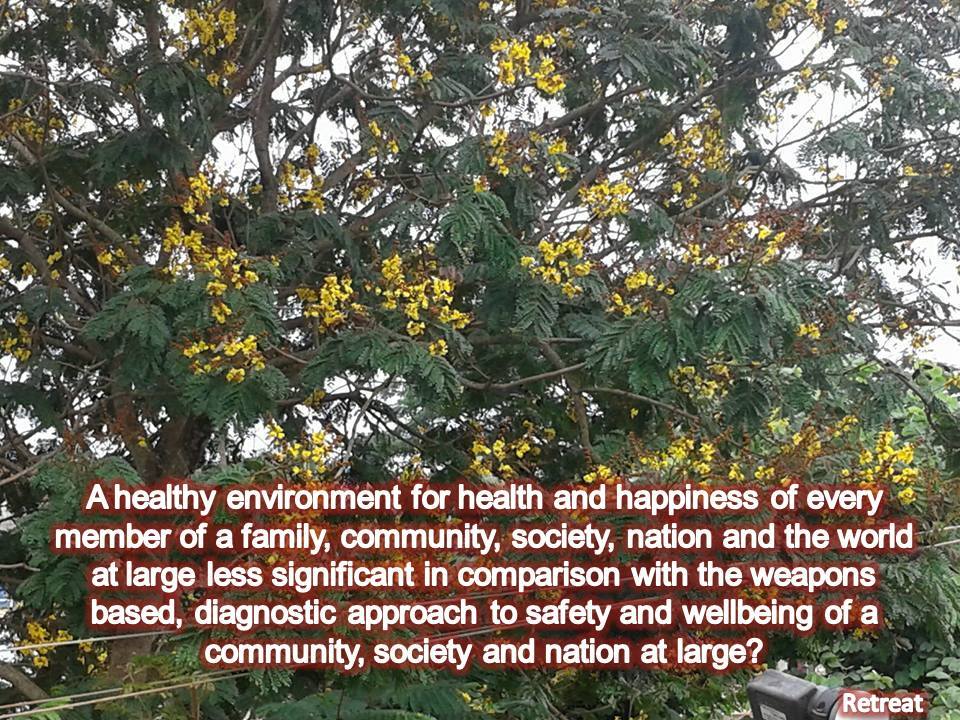
- Selfie Mode that helps us to be aware of ourselves (#selfawareness) and the environment, coz I agree with the U.N.'s statement, "What happens to Nature affects Humanity."
- Meditation For Mindfulness help us in clearing our mind off the facilities.
Thursday, May 14, 2020
जीवन पथ का अंधेरा और उजाला

अंधियारे और उजियारे का।
होश संभालने पर पृथ्वी वासी हो
पता चला दिन का और रात का।
बचपन में सुने किस्से-कहानिओं में,
खेल में और प्रतिस्पर्धियों में:
अनजाने में,अँधियारा प्रतीक बना
डर और पराजय का ।
डर और पराजय का ।
पराजय, अन्याय, अनर्थ व आरजकता
का पर्यायी हुआ इतिहास में।
द्वेष, बैर, ईर्ष्या, क्रोध, प्रतिशोध
सा परिलक्षित हुआ साहित्य में।
अज्ञानता, रहस्य, असंशोधित तथ्य
का आधार बना विज्ञान में।
पापाचार, अधर्म व विकृति
का परिचायक हुआ संस्कृति व धर्म में।
अन्धकार के कई आयाम उभरकर आये
जीवन के अविरल श्रोत में।
उजियारा जो जग को उजाले से भरे।
उजियारा जो अंधियारे को हरे;
अंधियारे के विपरीत है
उजियारे का हर आयाम।
कौन रह सकता है
इस वास्तविकता से अनजान।
पर, दोनों ही हमारे अस्तित्व के हैं अभिन्न अंश।
दृष्टि: हमारी एक इन्द्रिय से
हम अंधियारे और उजियारे की,
साये और प्रतिबिम्ब की
कर पाते हैं पहचान।
इस वास्तव को समझने का
प्रयत्न करने की ली ठान :
पलकों से ढककर आखों को
तो कुछ पल के लिए
चारों ओर अंधेरा छाया,
और दिलो -दिमाग पर
पड़ा अनजाने डर का साया।
अपनी आखों को बंद कर
एक जाने पहचाने पथ पर
कोशिश कर रही थी चलने की।
पथ के पास प्रकाशस्तंभ से
उजियारा पलकों से छनकर
मानो बढ़ने के लिए प्रोत्साहित कर पाया।
ज़मीन को पाँव से टटोल टटोल कर
बढ़ चली मैं उस पहचाने पथ पर।
रास्ते में आये रोड़ों से बचकर
जब पहुंची अंधियारे भरे पथ के मोड़ पर,
सहसा महसूस किया जैसे किसीने
मन और मस्तिष्क को
अंधियारे की चादर ओढ़ाकर
रोक दिया मुझे वहीं पर।
अंतर्ध्वनि गुंजी मेरे अस्तित्व में।
कहा "रुक क्यों गई, बढ़ चल इस पथ पर।
अनजान नहीं है तू इसके हर कण से।
महसूस कर, समझकर, निडर होकर ,
तू निरंतर बढ़ चल इस पथ पर।"
पलकें बिछी रहीं आखों पर,
मैं पथ को हर पद स्पर्श से
महसूस कर, और समझकर
निरंतर बढ़ चली उस पथ पर।
आत्मनिर्भरता,संवेदना, जिज्ञासा और धैर्य
को अंतर्ध्वनि ने किया उजागर,
और तड़ित की तरह
मेरे मन और मस्तिष्क को
आत्मसंशय, पथभ्रष्ट (पथ पर गिर जाने का डर)
होने के भय रूपी अंधियारे को दूर कर।
अब आत्मविशास सहित कदम रहे थे पथ पर बढ़।
बाहिर के अंधेरे से अब नहीं था कोई डर;
तभी बंद पलकों से उजियारा आया छानकर
और मुझे आभास हुआ उस प्रकाशस्तंभ का
जो है उस पथ के छोर पर।
आँखें खोलकर निहारा वादियों को
जो उस समय थी रात की चादर ओढ़कर।
स्त्री हो या पुरुष हम सभी चल रहे हैं
निरंतरअपने जीवन पथ पर
इस यात्रा के पड़ावों से गुज़रते हुए :
जूझते और समझते जीवन के
अंधियारे और उजाले को:
उनकी अलग अलग परिभाषाओं को।
उनके अलग अलग आयामों को।
जीवन समर नहीं है।
जीवन प्रतिस्पर्धा नहीं है।
जीवन क्रीड़ा नहीं है।
यह जीवन के अंधियारे के प्रति
मात्र हमारी प्रतिक्रियाएं हैं।
धीर, स्थिर, निर्भीक,
स्वाभिमानी, विनयशील हो
जीवन के अंधियारे दायरे से
गुज़रते हुए हम निरंतर रहें हैं बढ़
उस चिरंतन सत्य के उजाले की ओर।
जीवन पथ के अनजाने अंधियारे को
उजाले में बदलने में
उजाले में बदलने में
हमारे प्रयास, हमारे कर्म
मात्र ज़रिआ हैं, जिसमें
हमारी सत्यनिष्ठा, हमारी संवेदनशीलता
के उजियारे से हम
परस्पर को जीवन पथ पर
अग्रसर होने के लिए प्रोत्साहित कर
हम निरंतर बढ़ चले हैं अपने जीवन पथ पर।
सत्ता का लोभ, स्वार्थ,दंभ, अज्ञानता,
द्वेष , भेद -भाव , शोषण, वैमनस्यता
द्वेष , भेद -भाव , शोषण, वैमनस्यता
के अँधेरे से परस्पर को मुक्त कर;
प्रेम , सद्भावना, सत्यनिष्ठा, सौहार्द्य
के उजाले में हम सब मिलकर
निरंतर बढ़ चले हैं अपने जीवन पथ पर।
Monday, May 4, 2020
बारहवाँ माला (बारहवीं मंज़िल ) - कहानी

एक अरसे बाद संवेदना ने उस ईमेल बक्स को खोला। उसने तो सभी मैट्रिमोनियल वेबसाइट से अपने प्रोफाइल निकाल दिए थे। उन वेबसाइट्स से कोई ईमेल आने की गुंजाइश नहीं थी। उसने ईमेल बॉक्स मैं बैंकों, इन्शुरन्स कम्पनियों , प्रॉपर्टी बेचने वालों, टेलीफोन कंपनियों और सट्टे बाजार के एजेंट्स के इश्तेहार भरे ईमेल पाए। संवेदना मन ही मन मुस्कुरायी कि इन कम्पनिओं ने यह सब चिट्ठियाँ पूँजीपतिओं को भेजनी चाहिए। यह सोचते हुए वह ठहाके लगाकर हँसने लगी और यादों के बवंडर ने मानो उसे वर्तमान से अतीत में पहुँचा दिया; अब से बीते दस सालों में. खासकर उन दिनों में, जब वह बम्बई में नौकरी कर रही थी। २००८ और २००९ में हुई अर्थनैतिक उथल पुथल के चलते उसकी नौकरी चली गयी। २०१० में उसे बम्बई वाली नौकरी बड़े मुश्किल से मिली थी। बम्बई में चार बैडरूम वाले फ्लैट में रहने वाली तेरह पेइंग गेस्ट में से एक थी।
संवेदना चालीस वर्ष के उम्र की देहलीज़ पार कर चुकी थी। वह एक मध्यम वर्गीय परिवार में जन्मी अपने माता पिता की इकलौती संतान थी। पिता ने अपना कार्यकाल कागज़ बनाने की फैक्ट्री में बिताया और माँ ने गृहस्ति और उसे संभाला। वह एक साधारण सी लड़की अनुशासन में पली बढ़ी। उसके माता पिता ने उसे हमेशा ज़िन्दगी और समाज की विषमताओं से संभालकर रक्खा। संवेदना की माँ की ख्वाहिश थी कि बेटी पढ़ लिखकर अपना गृहस्त जीवन बिताये, पर पिता चाहते थे कि वह स्वावलम्बी हो।
नौकरी से अवकाश पाने से पहले संवेदना के पिता ने उसके मामा के साथ मिलकर व्यापार करने की कोशिश की पर कामयाब ना हो पाए। परिवार को आर्थिक तंगी और विषम परिथितिओं का सामना करना पड़ा। संवेदना पढ़ाई पूरी कर नौकरी करने लगी। वह स्कूल में पढ़ाने लगी। उसकी वेतन घर चलाने में काम आती । उसकी माँ बहुत दुःखी रहती संवेदना अपने माता पिता की कुंठा को भली भांति समझ पाती और आर्थिक परेशानियों के कारण घर में कलह होना स्वाभाविक था। इस विषम परिस्थिति का असर संवेदना पर पड़ा। उसने ठान लिया कि वह विवाह नहीं करेगी। वह और अच्छी नौकरी के लिए कोशिश करने लगी। संवेदना की माँ ने पूरी कोशिश की उसके लिए योग्य वर ढूंढने की और संवेदना से ज़्यादा उसकी माँ मायूस हुई, पर उन्होंने आस नहीं छोड़ी। साधारण सी दिखने वाली, शांत, सुशील, गंभीर व्यक्तित्व वाली संवेदना दुनिया के दांव पेंच से अनजान अब ज़िन्दगी के जद्दो जहद से जूझने लगी। नैतिकता, सतकर्म, सत्यनिष्ठा और लगन से कार्य करने में विश्वास करने वाली संवेदना दफ्तर की राजनीति, चापलूसी, चाटुकारिता, सहकर्मियों से कार्य में प्रतिस्पर्धा कर उनका अपनी उन्नति और कामयाबी पाने के लिए प्रयोग करना नहीं जानती थी। वह अपने सिद्धांतों के साथ समझौता नहीं करना चाहती थी। कारणवश, वह अपने सहकर्मियों की तरह तरक्की की सीढ़ियों को नहीं चढ़ पायी पर उसका सरल मन यही सोचकर खुश होता कि उसने औरों का भला किया है नुक्सान नहीं, और ज़िन्दगी के अंधड़ से निरंतर जूझती रही।
बम्बई के दफ्तर में उसके सहकर्मी उन छात्रों की उम्र के थे जिन्हे उसने स्कूल में पढ़ाया था। अब वह उसके अफसर भी थे, पर संवेदना ने परिस्थितियों के साथ समझौता कर अपना कार्य करती रही.
पेइंग गेस्ट में भी लड़कियां उससे आधे उम्र की थीं। वह सबके साथ बनाकर चलने की कोशिश करती पर उनकी बेबाक बातें उसे चुभती थीं. संवेदना को ना दफ्तर में और ना ही पेइंग गेस्ट हाउस में सुकून से काम कर और रह पा रही थी. उसके कार्यकाल में शुरू शुरू में उसके सहकर्मी उससे मज़ाक कर कहते थे कि वह "मैरिज मटेरियल" है। इतना संवेदनशील होकर कॉर्पोरेट क्या कहीं पर भी ना काम कर सकता है और ना ही करने दे सकता है।
संवेदना के परिवार जनों ने महसूस किया कि उसका विवाह ही उसके दुःखों का समाधान होगा। संवेदना से संपर्क के लिए उन्होंने उसका ईमेल एड्रेस बनाकर उन सब मैट्रिमोनियल साइट्स में दिया जहाँ उसका प्रोफाइल बनाया था. उन्हें क्या मालूम था कि उनकी यह कोशिश संवेदना के लिए और भी बड़ी आफत बन जाएगी। समाज का दस्तूर है सरल व्यक्ति का फायदा उठाना उसका मज़ाक उड़ाना और उसके स्वाभिमान को ठेस पहुंचना। अगर वह प्रतिवाद करे तो उसे हठी और दाम्भिक घोषित कर देना।
संवेदना पेइंग गेस्ट हाउस के एक कमरे में और दो लड़कियों के साथ रहती थी। दोनों ही उसकी छात्राओं के उम्र की थीं पर वह उनके साथ मिलजुलकर रहती और उनके कर्मक्षेत्र और परिवार के कारण हो रहे उनके दुःख और कष्ट सुनती और समाधान पाने में मदद करती। कुछ समय पश्चात संवेदना ने पाया कि दोनों लड़कियाँ उसका फायदा उठाने लगी थीं। यह बात उसने उन दोनों को महसूस होने नहीं दिया।
अब संवेदना को मैट्रिमोनियल साइट्स पर बने जाली प्रोफाइल्स से ईमेल और हो हो Hi5 नामक सोशियल नेटवर्क साइट से चिट्ठी और मेसेज आने लगे। पहले उसने उन्हें सच्चा समझकर उनको उत्तर दिया और पाया कि वे उससे स्मगलिंग, मनी लॉन्ड्रिंग जैसे गैर कानूनी काम करवाने के इरादे से संपर्क साध रहे थे। उनमें से बहुतों ने उससे पैसे मांगे। कि मलेशिआ में उनका करोड़ों का प्रोजेक्ट अटका पड़ा है और वह तीन चार लाख रूपये की आर्थिक मदद करे तो वे वहाँ की सरकार से उनका बकाया पैसा निकलवा सकते हैं। कुछ उसके साथ भद्दी बातें करने के लिए फ़ोन करते। संवेदना चालीस वर्ष की संवेदनशील औरत थी। इन सब वारदातों ने उसे झकझोरकर रख दिया। उसका माथा ठनका जब उसने फ़ोन नम्बरों की जांच की और पाया कि विदेशी नंबर फ़र्ज़ी थे और जो अपने आपको देश के अलग शहरों से फ़ोन कर रहे थे , दरअसल उनका फ़ोन नंबर बॉम्बे, महाराष्ट्र, दिल्ली और मध्य प्रदेश के थे।
संवेदना मानसिक रूप से तब और टूट गयी जब उसे समझ में आया की पेइंग गेस्ट में रहने वाली कुछ लड़कियां बोरीवली में रहने वाले उनके भाइयों, मंगेतरों और दोस्तों के साथ मिलकर उसके साथ भद्दे chat करते थे। यह उसने तब भाँपा जब कुछ लड़कियाँ बहाने से उसके कमरे में आयीं और ठीक उसके पीछे खड़े होकर chat स्क्रीन को घूर घूरकर देखने लगीं। संवेदना ने जानकार बिना हड़बड़ाए कंप्यूटर ऑफ़ करने की गुस्ताखी नहीं की। उसने उन लड़कियों से उनके आने का कारण पूछा और उनके अलग अलग जवाबों ने उसके शक को यकीन में बदल दिया।
संवेदना की माँ ने भाँप लिया था कि उनकी बेटी बहुत कुंठित है पर वह उन्हें बताती नहीं। उन्होंने संवेदना के पास जाने का मन बनाया। दिसंबर का महीना था और माताजी सुबह बम्बई अपनी बेटी के पास पहुँच गयी। ज़िन्दगी के थपेड़ों ने उन्हें काफी हिम्मतवाली महिला बना दिया था। उन्होंने जब अपनी बेटी को देखा तो उनकी अंतरआत्मा आर्तनाद करने लगी। उनकी बेटी ग़मों के बोझ तले दबकर मानो जीना ही भूल गयी थी। जिस कंपनी के लिए संवेदना काम करती थी वह बंद होने की कागार पर थी। संवेदना ने उसकी माँ का अपने कमरे में रहने का इंतज़ाम कर दिया था।
इकत्तीस दिसंबर के दिन संवेदना ने अपनी चुप्पी तोड़ी और अपनी माँ को अपने सभी अनुभव बताये। उसकी माँ हतवाक हो एकटक अपनी बेटी की ओर देखती रही। समाज की जिस नृशंसता से उन्होंने अपनी बेटी को बचाने की कोशिश की थी, उनकी बेटी ने साल भर में सब कुछ अनुभव कर लिया था। बेटी की ज़िन्दगी की विडम्बना को वे भली भांति महसूस कर रहीं थीं अनायास उनकी नज़र कमरे से लगी बड़ी बालकनी पर पड़ी. पेइंग गेस्ट हाउस का फ्लैट इमारत के बारहवें माले पर था। अनायास उन्होंने कहा "अगर कोई इस बालकनी से नीचे गिरेगा तो उसका बच पाना असम्भव है। संवेदना , जो अब उदास और खोई खोई सी रहती थी , उसके माँ की कही बात उसके मन में दर्ज़ हो गयी। बार बार संवेदना के मन में उसके माँ की बात गूंजती रही।
रात को सभी नए साल का जश्न मनाकर सोने चले गए। संवेदना बिस्तर लगाकर सोने की तैयारी ही कर रही थी कि उसके मोबाइल फ़ोन की घंटी बज पड़ी. हड़बड़ी में उसने यह सोचकर फ़ोन उठाया की घर से मामा -मामी नए साल की शुभ कामनाएं देने के लिए फ़ोन कर रहे होंगे। पर फ़ोन पर उसे कुछ सी पहचानी आवाज़ सुनाई दी। बौनी चटर्जी शराब के नशे में धुत उसे नए साल के लिए फ़ोन कर रहा था। संवेदना ने उस फ़ोन नंबर की भी तहकीकात की थी वह नंबर भी जाली था। चटर्जी साहब ने प्रोफाइल फोटो में इलेक्ट्रॉनिक सिंथेसाइज़र की तस्वीर लगा रखी थी. उसके अनुसार, वह सालों से स्विट्ज़रलैंड में रह रहा था, पर उसकी अंग्रेजी से उसकी बात झूठ साबित होती थी। जब चटर्जी साहब ने बंगाली में भद्दी बातें करने लगे तो संवेदना ।संवेदना ने उसे दोबारा फ़ोन ना करने को कहा; और यह भी कहा कि वह पुलिस से शिकायत करेगी अगर उसने दोबारा फ़ोन किया।
संवेदना चुप चाप रोती रही. भविष्य पूरा अंधकारमय नज़र आ रहा था उसे। दुनिया और लोगों पर से उसका भरोसा उठ गया था। संवेदना को पूरी दुनिया और सभी लोग मतलबी और क्रूर लगने लगे थे। पर वह अपने ज़िद पर कायम थी कि वह कभी अपने सिद्धांतों से समझौता नहीं करेगी। अब उसे यह एहसास होने लगा था उसकी ज़िद उसके दुःखों का कारण है। तभी उसके मन मस्तिष्क में उसकी माँ की कही हुई बात गूंजने लगी "इस बालकनी से अगर कोई नीचे गिरेगा तो उसका बचना असंभव है!"
अनायास संवेदना अपने बिस्तर से उठी और बालकनी के रेलिंग के पास जाकर रुकी। मन में हताशा के अंधड़ में उन पलों की यादें बिजली की तरह कौंधने लगी जब वह उन झूठे और मक्कार लोगों पर यकीन कर इसी बालकनी में खड़े होकर उनके फ़ोन का जवाब देती थी। आंसुओं की धारा अविरल उसकी आँखों से बहने लगी। सिसकियों ने उसके शरीर को झकझोर दिया था। रुंधे हुए गले से सिसकियों की प्रतिध्वनि को रोकने की कोशिश करते हुए उसने मुड़कर अपनी माँ और उसकी रूम मेट रूपा मजूमदार को देखा जो सो रहीं थीं। माँ की बात लगातार उसके मन में गूँज रही थी। संवेदना ने बालकनी के रेलिंग के आधे हिस्से में अपने पाँव जमाकर उस बारहवें माले की बालकनी की छोर से नीचे ज़मीन को देखा। .. बस एक छलांग। .. एक छलांग और वह इस दर्द भरी ज़िन्दगी से बच जाएगी! संवेदना ने रेलिंग को ज़ोरों से पकड़ा और चंद लम्हों में उसकी दुःख भरी यादें उसकी माँ की बात के साथ शूल बनकर उसे लगातार चुभ रहीं थीं। जैसे ही वह कूदने के लिए कुछ और झुकी तो ठंडी हवा के झोंके ने उसके चेहरे को स्पर्श कर मानो उसे दुःखों के आवेग को शिथिल कर दिया।
संवेदना रेलिंग से आहिस्ता नीचे उतरी । उसका सारा शरीर शिथिल हो गया था। वह रेलिंग के सहारे बालकनी में बैठ गई। उसकी माँ की आवाज़ अभी भी उसके मस्तिष्क में गूंज रही थी। संवेदना ने मन ही मन सोचा क्या माँ ने उसकी दुरावस्था को देख उसे कष्टों से निजात पाने के तरीके की ओर इशारा किया था? या वह इतनी कमज़ोर हो गई है कि उसे अपने आप पर भरोसा नहीं रहा ? उसने तो किसी का कुछ बिगाड़ा नहीं है तो उसने अनजान डर को अपने ऊपर कैसे हावी होने दिया? वह अपने आपको कमज़ोर समझकर हार मान रही है? उसका स्वाभिमान उसका दंभ नहीं है और उसकी संवेदनशीलता उसकी कमज़ोरी नहीं है।हम हर परिस्थिति और परिवेश को समझकर कैसे कार्य करते हैं जिससे किसी का अहित या कष्ट ना हो।हम किसी के दुःख का कारण ना बने और ना ही किसी को बनने दें। .... संवेदना ने आकाश की तरफ देखा। आकाश में टिमटिमाते तारों को देखा; उनमें से कई तारे अब अस्तित्व में नहीं हैं पर उनकी रौशनी हम तक पहुँच रही है उनके स्थाई प्रतिबिम्ब की तरह।
"संवेदना, तू क्या ख्यालों में खोई हुई है ? कब से कंप्यूटर के सामने बैठकर क्या सोच रही है ?.... "
माँ की आवाज़ संवेदना को अतीत के लम्हों से वर्तमान के हकीकत में ले आई।
Subscribe to:
Posts (Atom)

-
 With tired and cataract-foggy eyes He stood gazing at The lush green glade and the arboreal stead. It's wooden fence with a ricke...
 -
 DEDICATED TO THE CHILDREN LIVING IN THE WAR TORN REGIONS OF THE WORLD... “Ravi, you rascal, look what you have done! You have broken ...
